How Does Zepbound Work? GLP-1 and GIP Explained Simply
Zepbound mimics two gut hormones, GLP-1 and GIP, to cut appetite, slow digestion and improve blood sugar. How it drives 15-21% weight loss and beats Wegovy.
Written by Nataliia Bondarchuk. Updated October 23, 2026.
Zepbound works by copying two hormones your gut releases after you eat, GLP-1 and GIP. Together they tell your brain you are full, slow down your stomach, and help your body handle sugar and fat better. The result is that you eat less without feeling as hungry, and over a year or more most people lose a large amount of weight: about 21% of their body weight at the highest dose in the main trial.
That is the one-paragraph version. Here is what is actually happening inside your body after each weekly injection, why Zepbound tends to beat older drugs like Wegovy, and what the mechanism means for side effects and for what happens when you stop.
How Does Zepbound Work? The Short Answer
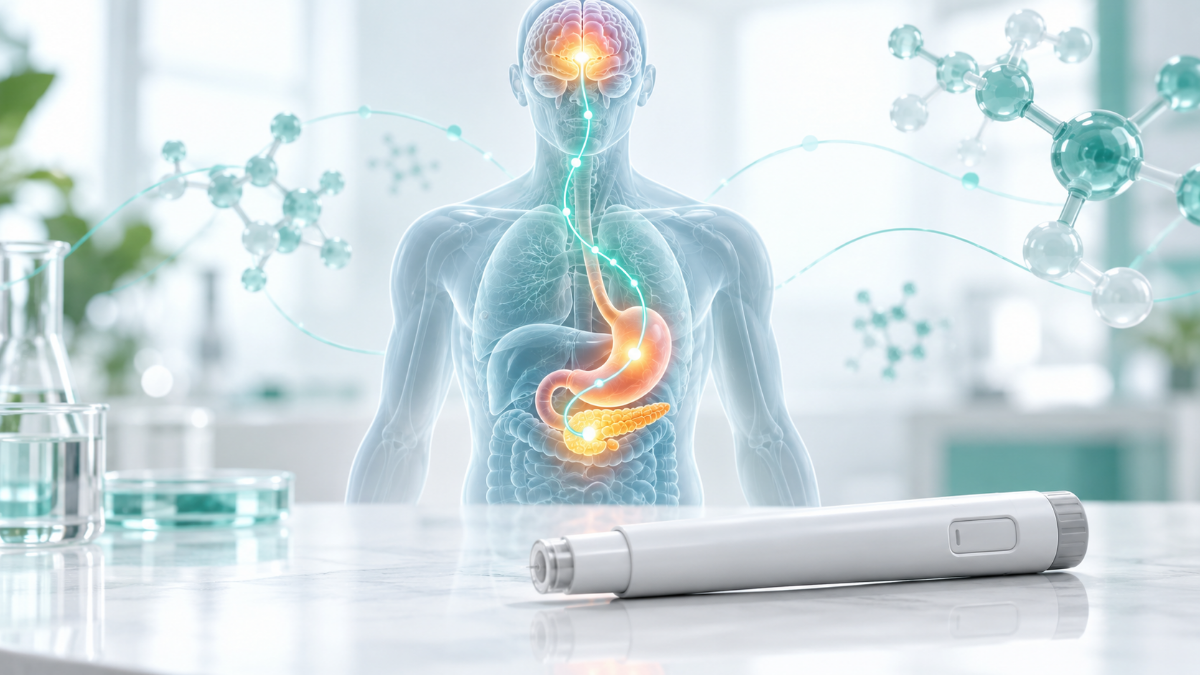
- 1Zepbound's active ingredient is tirzepatide, a single molecule that activates two hormone receptors: GLP-1 and GIP.
- 2In the brain, it lowers appetite and food cravings, so you eat less.
- 3In the stomach, it slows emptying, so you feel full longer after smaller meals.
- 4In the pancreas and fat tissue, it improves insulin release and how fat is stored and burned.
- 5Each injection lasts about a week, which is why it is taken once weekly.
- 6The drug does not burn fat by itself. Weight comes off because you take in fewer calories than you use, with much less effort than dieting alone.
Two Hormones, One Molecule
After a meal, cells in your gut release several hormones that signal "food has arrived." Two of the most important are GLP-1 (glucagon-like peptide-1) and GIP (glucose-dependent insulinotropic polypeptide). Both tell the pancreas to release insulin and send fullness signals to the brain. Your own versions are broken down within minutes.
Older weight-loss injections such as Wegovy and Ozempic copy only GLP-1. Tirzepatide was engineered to activate both the GLP-1 and the GIP receptor and to last about five days in the blood instead of a few minutes. Lilly calls it a dual GIP and GLP-1 receptor agonist. The GIP part is what sets it apart, and researchers think GIP adds extra appetite suppression and better fat handling while also easing some of the nausea that GLP-1 alone causes.
What Zepbound Does in Each Part of the Body
How Zepbound works, organ by organ
Brain (hypothalamus and reward centers)
Activates GLP-1 and GIP receptors that control hunger and food reward
Less hunger, fewer cravings, less interest in snacks
Stomach
Slows gastric emptying, especially early in treatment
Feeling full sooner and for longer; sometimes nausea or burping
Pancreas
Boosts insulin release when blood sugar is high and lowers glucagon
Steadier blood sugar; lower A1C in people with diabetes
Liver
Reduces sugar output and liver fat
Better fasting glucose; improvement in fatty liver
Fat tissue
GIP receptors improve how fat cells store and release energy
More weight loss than GLP-1 alone, partly from fat rather than lean mass
How Zepbound Causes Weight Loss
Put simply, Zepbound makes a calorie deficit feel normal. In the SURMOUNT-1 trial, people who took 15 mg a week for 72 weeks lost an average of 20.9% of their body weight, compared with 3.1% on placebo. Even the lowest maintenance dose, 5 mg, produced about 15% loss. More than half of people on the top dose lost at least 20%. For someone starting at 230 pounds, that is roughly 48 pounds.
Weight loss comes mainly from eating less. Studies that measured food intake found people on tirzepatide ate several hundred fewer calories a day without being told to. The drug does not raise your metabolism, and it does not target belly fat specifically, although visceral fat tends to fall as total weight does. For a week-by-week picture, see tirzepatide weight loss by week, and for the dose-by-dose numbers, tirzepatide dosage for weight loss.
Why the Dose Starts Low
Zepbound begins at 2.5 mg for four weeks, then rises in 2.5 mg steps to a maintenance dose of 5, 10 or 15 mg. The 2.5 mg dose is not meant to cause much weight loss; it lets your stomach and gut adjust so nausea stays manageable. This is also why Zepbound takes a few months to show its full effect, and why stopping and restarting usually means going back to a lower dose.
How Zepbound Compares With Wegovy
Because it works on two receptors, Zepbound has produced more weight loss than semaglutide (Wegovy) in trials. In the SURMOUNT-5 head-to-head study, people on tirzepatide lost about 20% of their body weight versus about 14% on semaglutide 2.4 mg over 72 weeks. The newer Wegovy HD 7.2 mg dose narrows that gap. Side effects are similar and mostly digestive. We go through the numbers in tirzepatide vs semaglutide.
Zepbound and Mounjaro are the same drug under two names: Mounjaro is approved for type 2 diabetes and Zepbound for weight management and sleep apnea. See Mounjaro vs Zepbound.
What the Mechanism Means for Side Effects
Most Zepbound side effects follow directly from how it works:
- 1Slower stomach emptying causes nausea, fullness, burping, and sometimes vomiting, especially after dose increases or large fatty meals. Eating smaller meals helps; see best foods to eat on tirzepatide.
- 2Changes in gut movement cause diarrhea in some people and constipation in others.
- 3Eating much less can lead to tiredness, hair shedding and loss of muscle along with fat, which is why protein and strength training matter. More in tirzepatide and muscle loss.
- 4Rapid weight loss raises the risk of gallstones.
- 5Rarely, pancreatitis. Tirzepatide also carries a boxed warning about thyroid C-cell tumors seen in rodents, so it is not for people with a personal or family history of medullary thyroid cancer.
What Happens When You Stop
Zepbound does not reset your appetite permanently. Once the drug leaves your body, about four to five weeks after the last dose, hunger returns. In the SURMOUNT-4 trial, people who switched to placebo after 36 weeks regained about 14% of their body weight over the next year, while those who kept taking tirzepatide lost a further 5.5%. That is why it is approved for long-term use. Our guide to what happens when you stop tirzepatide covers how to plan for it.
A note on devices: if you use the new multi-dose pen, a missed priming step or an incomplete dose can quietly cut what you receive. Our Zepbound KwikPen guide explains the dose-check steps.
If you have been offered "tirzepatide peptide" from a non-pharmacy source, it is worth understanding what the word means and does not mean; is tirzepatide a peptide explains the chemistry and why it is nothing like the research peptides sold online.
Zepbound is often confused with other weight-loss brands. Our guide is Wegovy tirzepatide? maps each brand name to its active ingredient.
Zepbound is also FDA-approved for moderate to severe obstructive sleep apnea in adults with obesity. We cover the SURMOUNT-OSA results, CPAP and Medicare coverage in Zepbound for sleep apnea.
The Bottom Line
Zepbound works by mimicking two gut hormones, GLP-1 and GIP, that lower appetite, slow digestion and improve how your body handles sugar and fat. The combination explains both its strong results, about 15% to 21% weight loss depending on dose, and its mostly digestive side effects. It is a tool that makes eating less feel natural, not a drug that burns fat on its own, and it keeps working only while you keep taking it.
FAQ
It activates GLP-1 and GIP receptors in the brain and gut, which reduces hunger, slows stomach emptying and improves blood sugar control. People eat less and lose about 15% to 21% of their body weight over 72 weeks, depending on dose.
Wegovy copies one hormone, GLP-1. Zepbound copies two, GLP-1 and GIP. The extra GIP activity is thought to add appetite suppression and better fat metabolism, and trials show more weight loss with Zepbound.
Appetite usually drops within the first week or two. Weight loss is slower because the dose starts low; most people see clear results by month three and the full effect after a year or more.
Not directly. It lowers appetite so you eat less, and your body uses stored fat to make up the difference. Most of the weight lost is fat, but some lean mass is lost too.
It produces weight loss on its own, but trials included diet and activity advice, and people who change their eating habits lose more and keep more muscle.
Sources
- 1Zepbound (tirzepatide) prescribing information, DailyMed
- 2Tirzepatide Once Weekly for the Treatment of Obesity (SURMOUNT-1), NEJM, 2022
- 3Continued Treatment With Tirzepatide for Maintenance of Weight Reduction in Adults With Obesity (SURMOUNT-4), JAMA, 2024
- 4Tirzepatide as Compared with Semaglutide for the Treatment of Obesity (SURMOUNT-5), NEJM, 2025
This article is for general information and is not medical advice. Talk to your doctor before starting or stopping any weight-loss medicine.

Nataliia Bondarchuk
Author
Comments (0)
Be the first to comment on this article.
More articles