Mounjaro vs Zepbound: Same Drug, Different Labels
Mounjaro vs Zepbound: both are tirzepatide in the same doses. How their approvals, insurance coverage, prices and trial results differ, and which you'll get.
Written by Nataliia Bondarchuk. Updated October 22, 2026.
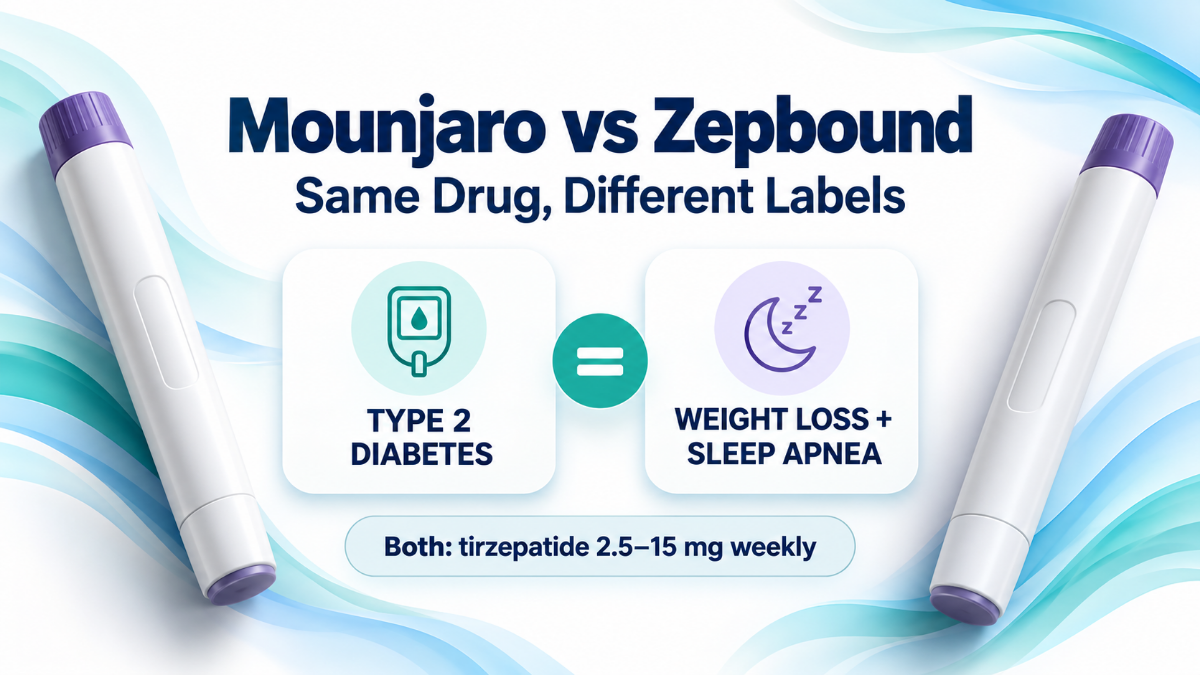
Mounjaro and Zepbound are the same medicine. Both are tirzepatide, made by Eli Lilly, given as a once-weekly injection in the same doses from 2.5 mg to 15 mg. The difference is the label: Mounjaro is approved for type 2 diabetes, while Zepbound is approved for chronic weight management and obstructive sleep apnea in adults with obesity. That label decides who can be prescribed which brand, how insurance covers it, and what it costs.
Mounjaro vs Zepbound at a Glance
Mounjaro vs Zepbound (October 2026)
Active ingredient
Tirzepatide
Tirzepatide
FDA-approved for
Type 2 diabetes (with diet and exercise)
Chronic weight management; obstructive sleep apnea with obesity
First approved
May 2022
November 2023 (sleep apnea December 2024)
Doses
2.5 mg start, then 5, 7.5, 10, 12.5, 15 mg weekly
2.5 mg start, then 5, 7.5, 10, 12.5, 15 mg weekly
Forms in the US
Single-dose pens
Single-dose pens, vials and KwikPen (4 doses)
Usually covered for
Type 2 diabetes
Weight loss only if the plan covers obesity drugs
Self-pay through Lilly
Savings card for commercially insured patients with diabetes
$299 (2.5 mg) to $449 per month
Is Zepbound the Same as Mounjaro?
Yes, chemically. Both contain tirzepatide, a once-weekly drug that activates two gut-hormone receptors, GIP and GLP-1. It slows stomach emptying, lowers blood sugar after meals and reduces appetite. The dose schedule is identical: 2.5 mg for four weeks, then increases of 2.5 mg at least every four weeks to a maintenance dose of 5 to 15 mg. See our tirzepatide dosage guide.
Weight Loss: Same Drug, Different Trials
Zepbound's approval rests on the SURMOUNT trials in people with obesity without diabetes. In SURMOUNT-1, the 15 mg dose produced about 20.9% average weight loss over 72 weeks. Mounjaro's approval rests on the SURPASS trials in type 2 diabetes, where weight loss was smaller, typically about 7 to 12 kg, because people with diabetes tend to lose less on any GLP-1 drug. The drug is the same; the populations were different. For the realistic timeline, see tirzepatide weight loss by week.
Which One Will Your Doctor Prescribe?
- 1If you have type 2 diabetes, you will usually be prescribed Mounjaro, and most plans cover it.
- 2If you have obesity, or overweight with a weight-related condition, and no diabetes, Zepbound is the approved brand.
- 3If you have obesity and obstructive sleep apnea, Zepbound is approved for that too.
- 4Using Mounjaro off-label for weight loss is possible, but many insurers now check for a diabetes diagnosis before paying.
Cost and Coverage
Coverage depends on the label. Mounjaro is on most formularies for type 2 diabetes. Zepbound is covered for weight loss only if your plan includes obesity drugs. Without coverage, Lilly sells Zepbound directly through LillyDirect: $299 a month for 2.5 mg, $399 for 5 mg, and $449 for 7.5 mg to 15 mg if you refill within 45 days, in vials or the KwikPen. Medicare's GLP-1 Bridge, which started on July 1, 2026, offers certain GLP-1 drugs for weight loss at a $50 copay to eligible Part D members.
Side Effects
Because the drug is the same, so are the side effects: nausea, diarrhea, vomiting, constipation and reduced appetite, mainly after starting and after each dose increase. Both carry the same warnings about pancreatitis, gallbladder problems and a boxed warning about thyroid C-cell tumors seen in rodents. Our side effects guide and best foods to eat on tirzepatide cover how to manage them.
Can You Switch Between Mounjaro and Zepbound?
Yes. Because the dose strengths match, people who switch, for example after an insurance change, usually stay on the same dose. Your prescriber needs to write a new prescription for the other brand.
Because both brands contain tirzepatide, a generic would replace both; the patent timeline is in generic Zepbound and Mounjaro.
If you are also weighing an older daily injection, see liraglutide vs tirzepatide for how Saxenda and Victoza compare with Zepbound and Mounjaro.
One difference between the two brands is the sleep apnea indication, which belongs to Zepbound. See Zepbound for sleep apnea: what the approval covers for the trial results and coverage details.
Bottom Line
Mounjaro and Zepbound are the same tirzepatide in the same doses. Mounjaro is the diabetes brand, Zepbound the weight-loss and sleep-apnea brand, and that label drives coverage and price. For how tirzepatide compares with other options, read tirzepatide vs semaglutide.
FAQ
Yes. Both are tirzepatide in the same doses. They are approved for different conditions.
Neither. The drug is identical. Zepbound is the brand approved for weight loss, and its trials showed up to about 21% average loss at 15 mg.
Most plans cover diabetes drugs, but many exclude weight-loss drugs. Coverage follows the approved use.
Only off-label, and many insurers will not cover it. Zepbound is the approved option.
Through LillyDirect, $299 to $449 a month depending on dose, if refills are on time.
Sources
- 1Zepbound self-pay pricing, LillyDirect, September 2026
- 2SURMOUNT-1: tirzepatide once weekly for the treatment of obesity, New England Journal of Medicine, 2022
- 3Lilly launches Zepbound KwikPen, AmSpa, February 2026
- 4Medicare GLP-1 Bridge, CMS

Nataliia Bondarchuk
Author
Comments (0)
Be the first to comment on this article.
More articles