Best Foods to Eat on Tirzepatide—and 10 Foods That Can Make Side Effects Worse
What to eat on tirzepatide: protein, fiber and hydration basics, plus 10 foods that may make nausea, reflux, bloating or diarrhea worse.
Best Foods to Eat on Tirzepatide—and 10 Foods That Can Make Side Effects Worse
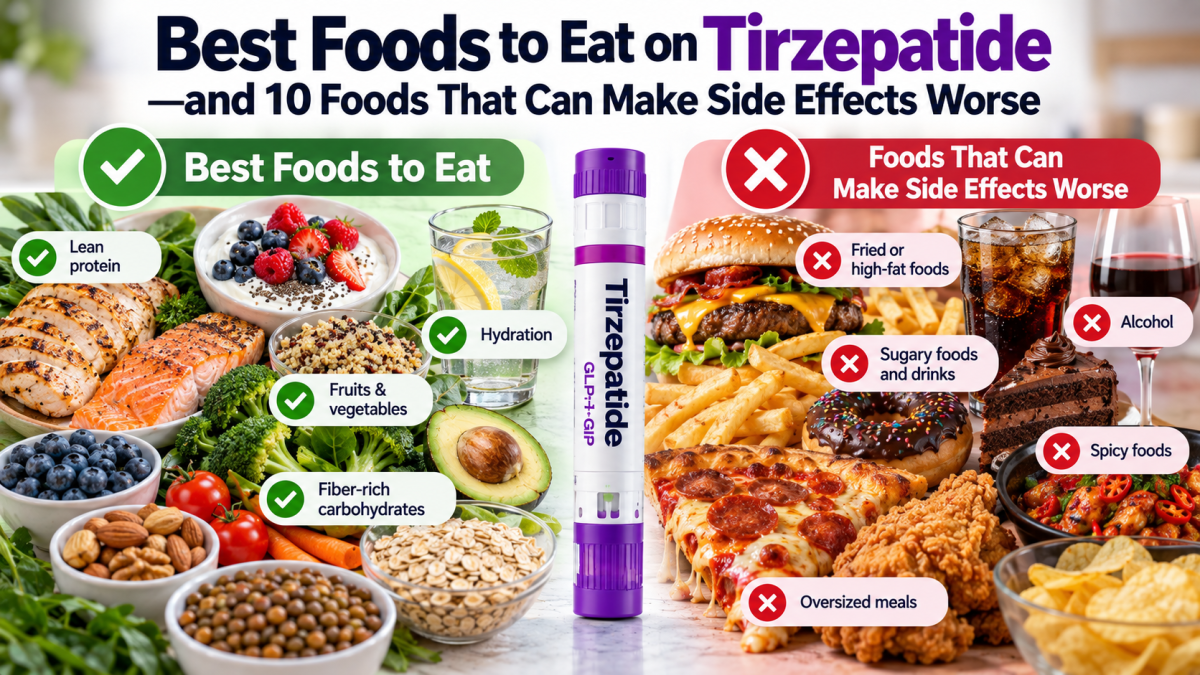
There is no official "tirzepatide diet," but what you eat can make a big difference in how treatment feels. Smaller meals built around lean protein, fiber-rich foods, minimally processed carbohydrates, fruits, vegetables, and enough fluids are often easier to tolerate and can help protect nutrition while appetite is lower.
The foods most likely to cause trouble are usually not mysterious: very fatty or fried meals, oversized portions, heavy restaurant food, large amounts of sugar, alcohol, spicy foods, and anything you personally discover triggers nausea, reflux, bloating, or diarrhea. The goal is not to create a long forbidden-food list. It is to make a slower-digesting stomach easier to live with.
Related: not losing weight on tirzepatide, protecting muscle and our side effects guide.
The Simplest Tirzepatide Eating Rule
Eat less volume at one time, but make the food you do eat count.
Tirzepatide can reduce appetite and slow stomach emptying. That combination is useful for weight loss, but it also means the giant meal that once felt merely heavy can suddenly feel like a terrible idea.
A smaller plate with protein, produce, and a tolerable carbohydrate often works better than eating very little all day and then trying to force down one enormous dinner.
Best Foods to Eat on Tirzepatide
The best foods are usually nutrient-dense, reasonably easy to digest, and practical enough to eat even when your appetite is much smaller than before.
1. Lean Protein
- 1Chicken or turkey
- 2Fish
- 3Eggs
- 4Greek yogurt or skyr
- 5Cottage cheese
- 6Tofu or tempeh
- 7Beans and lentils if well tolerated
Protein becomes especially important when total food intake falls. It supports muscle maintenance, helps meals feel satisfying, and makes it easier to get useful nutrition from a smaller amount of food.
There is no single protein target that is right for every tirzepatide user. Age, body size, activity, kidney function, medical history, and the speed of weight loss all matter.
2. Cooked Vegetables
- 1Carrots
- 2Zucchini
- 3Green beans
- 4Spinach
- 5Squash
- 6Sweet potato
- 7Soft-cooked broccoli if tolerated
Vegetables provide fiber, vitamins, minerals, and volume, but raw vegetables can sometimes feel surprisingly heavy when digestion is already slowed. Cooking them can make them easier to tolerate.
3. Fruit
- 1Berries
- 2Bananas
- 3Apples
- 4Pears
- 5Oranges
- 6Melon
- 7Kiwi
Whole fruit can be an easy way to add fiber, fluid, and micronutrients without requiring a huge meal. If nausea is active, softer or less acidic fruit may feel better than something very tart.
4. High-Fiber Carbohydrates
- 1Oats
- 2Quinoa
- 3Barley
- 4Brown rice
- 5Whole-grain bread
- 6Beans
- 7Lentils
Fiber can help with bowel regularity and overall diet quality. But going from very little fiber to an enormous amount overnight can create bloating, gas, or abdominal discomfort.
If constipation is already a problem, increase fiber gradually and make sure fluid intake rises with it.
5. Soups and Softer Meals
Soup, yogurt bowls, oatmeal, eggs, soft rice dishes, or simple protein-and-vegetable meals can be easier to manage on days when appetite is extremely low.
That can be particularly useful after a dose increase, when nausea or early fullness sometimes becomes more noticeable.
6. Plain Foods When Nausea Is Bad
- 1Toast
- 2Crackers
- 3Rice
- 4Bananas
- 5Plain potatoes
- 6Broth
- 7Simple yogurt
A perfect high-fiber meal is not always the priority when you feel sick. During short periods of nausea, simple bland foods may be easier to tolerate while you work back toward a more complete diet.
7. Water and Other Low-Calorie Fluids
Reduced appetite can sometimes mean reduced thirst awareness too. Vomiting or diarrhea can make dehydration much more likely.
Regular water intake matters for hydration and can also make constipation easier to manage. Some people find drinking between meals more comfortable than taking large amounts of fluid with food.
10 Foods and Drinks That Can Make Tirzepatide Side Effects Worse
These are not universally banned foods. They are common symptom triggers. One person may tolerate pizza perfectly well while another discovers that two slices are enough to ruin the evening.
1. Fried Foods
French fries, fried chicken, doughnuts, and other heavily fried foods combine large amounts of fat with slower digestion — exactly the combination that can worsen nausea, fullness, reflux, or vomiting.
2. Very Fatty Meals
Cream-heavy dishes, fatty cuts of meat, rich cheese meals, and large amounts of butter or oil may sit heavily in a stomach that is emptying more slowly.
3. Oversized Restaurant Meals
Sometimes the problem is not the ingredient. It is the sheer volume.
A large burger, fries, appetizer, dessert, and drink may overwhelm the same stomach that now feels comfortably full after half the meal.
4. Very Sugary Foods
Candy, pastries, large desserts, and other foods loaded with added sugar can worsen stomach upset in some people while providing a lot of calories in a small volume.
5. Sugary Drinks
Regular soda, sweetened coffee drinks, juice-heavy beverages, and similar drinks can deliver substantial sugar without much satiety and may aggravate gastrointestinal symptoms for some people.
6. Spicy Foods
Hot peppers, spicy sauces, and heavily seasoned dishes are not automatically a problem. But if tirzepatide has already made reflux or nausea more noticeable, spicy food can add another layer of irritation.
7. Alcohol
Alcohol can worsen nausea, reflux, dehydration, and calorie intake. It can also complicate blood sugar management for people using tirzepatide in a diabetes treatment plan.
8. Carbonated Drinks
Carbonation can increase belching, pressure, and bloating. If you already feel uncomfortably full after small meals, fizzy drinks may make that sensation worse.
9. Large Amounts of Raw Cruciferous Vegetables
Broccoli, cauliflower, cabbage, and Brussels sprouts are nutritious foods. But very large portions can produce gas and bloating, particularly when digestion is already slow.
Cooking them or reducing the portion may solve the problem without eliminating them from the diet.
10. Highly Processed Snack Foods
Chips, pastries, packaged sweets, and similar foods are often easy to eat quickly, calorie-dense, and relatively low in protein, fiber, or micronutrients.
When appetite is limited, regularly filling that smaller food budget with low-nutrient foods can make it harder to get enough protein and overall nutrition.
The Biggest Mistake: Eating Until You Feel Full
Before tirzepatide, "eat until you're full" may have felt reasonable.
On tirzepatide, waiting until you feel completely stuffed may mean you have already eaten too much for your slower-digesting stomach.
Eating slowly and stopping at comfortable satisfaction rather than maximum fullness can reduce the chance of nausea, reflux, pressure, and that unpleasant feeling that the meal is sitting in your stomach for hours.
What to Eat When Tirzepatide Makes You Nauseous
- 1Smaller meals
- 2Plain crackers or toast
- 3Rice or oatmeal
- 4Bananas
- 5Soup or broth
- 6Simple lean protein in small portions
- 7Cool foods if cooking smells make nausea worse
- 8Water or other tolerated fluids between meals
The key word is small. A food that is usually healthy can still feel awful if the portion is too large while nausea is active.
What to Eat for Constipation on Tirzepatide
- 1Oats
- 2Kiwi
- 3Pears
- 4Berries
- 5Vegetables
- 6Beans or lentils if tolerated
- 7Whole grains
- 8Adequate fluids
Fiber helps many people, but suddenly doubling fiber while drinking very little fluid can make bloating and constipation feel worse rather than better.
Persistent constipation, significant abdominal pain, repeated vomiting, or inability to pass stool or gas deserves medical attention rather than another homemade fiber experiment.
What to Eat When You Have Diarrhea
When diarrhea is active, temporarily simplifying meals and prioritizing fluids may be more useful than forcing a high-fiber diet.
- 1Rice
- 2Bananas
- 3Toast
- 4Oatmeal
- 5Potatoes
- 6Soup or broth
- 7Small amounts of lean protein
- 8Fluids and electrolytes when appropriate
Severe or prolonged diarrhea can cause dehydration and should be discussed with a healthcare professional.
What to Eat for Acid Reflux or Heartburn
Smaller meals become especially important when reflux is the problem.
High-fat meals, spicy foods, chocolate, caffeine, alcohol, peppermint, and acidic foods can worsen reflux in susceptible people. Your personal triggers matter more than trying to eliminate every item on that list forever.
Avoiding lying down immediately after eating can also help.
Protein Matters More When Your Appetite Is Tiny
One of the strange problems with a medication that works extremely well on appetite is that eating enough can sometimes become harder than eating less.
If someone is eating half as much food as before, the nutritional quality of that food matters more. Protein deserves particular attention because substantial weight loss includes some loss of lean tissue as well as fat.
That does not mean every meal needs to become a giant protein challenge. Smaller portions of protein spread across the day may be easier to tolerate than forcing one massive serving at dinner.
Should You Drink Protein Shakes on Tirzepatide?
They can be useful, particularly when appetite is low or solid food feels difficult.
But a protein shake is a convenience tool, not a requirement. Whole foods provide additional nutrients, fiber, texture, and variety that a shake may not.
Some shakes are also extremely sweet, high in sugar alcohols, or large enough to cause bloating. Tolerance matters.
Should You Avoid Carbs on Tirzepatide?
No general rule says tirzepatide requires a low-carbohydrate diet.
Whole grains, fruit, beans, potatoes, and other carbohydrate foods can fit perfectly well. The more useful distinction is usually between minimally processed, fiber-rich foods and large amounts of refined carbohydrates or sugary foods that offer little nutrition for the calories.
Should You Avoid Fat?
No. Fat is an essential nutrient.
The problem is usually very high-fat meals rather than reasonable portions of foods such as olive oil, avocado, nuts, seeds, or fatty fish.
When nausea or reflux is active, smaller amounts may feel better.
A Simple Day of Eating on Tirzepatide
- 1Breakfast — Greek yogurt with berries and a small amount of oats
- 2Lunch — grilled chicken or tofu with cooked vegetables and a small serving of rice or quinoa
- 3Snack — fruit, cottage cheese, yogurt, or a small protein shake if needed
- 4Dinner — fish, chicken, beans, or another protein with vegetables and potato or whole grains
- 5Fluids — water regularly throughout the day
This is an example, not a prescribed meal plan. Someone with diabetes, kidney disease, food allergies, gastrointestinal disease, pregnancy, or other medical needs may require a very different approach.
What to Eat Around Injection Day
Some people notice that nausea or fullness is more noticeable shortly after their weekly dose, particularly when starting treatment or increasing the dose.
If that is your pattern, lighter meals, smaller portions, less fat, and avoiding a huge celebration meal around injection time may be more comfortable.
There is no official rule that you must eat a specific meal before or after an injection.
Do You Need to Count Calories?
Not everyone does.
For some people, tirzepatide naturally reduces portions enough that detailed calorie tracking adds little value. For others, a short period of tracking can reveal that liquid calories, snacks, or restaurant meals are larger than expected.
The goal should be useful information, not turning every meal into an accounting exercise.
When Eating Too Little Becomes the Bigger Problem
Reduced appetite is expected. Being unable to maintain adequate nutrition is different.
- 1Persistent vomiting
- 2Repeated dizziness or signs of dehydration
- 3Pronounced weakness
- 4Difficulty eating enough for days at a time
- 5Very rapid weight loss accompanied by declining strength
- 6Severe abdominal pain
- 7Inability to keep fluids down
Those are reasons to contact a healthcare professional rather than simply celebrating that the medication is suppressing appetite strongly.
The Best Tirzepatide Diet Is the One You Can Actually Tolerate
There is no universally perfect menu.
Some people tolerate dairy beautifully. Others become nauseated by it. Some can eat salads every day. Others discover that raw vegetables create miserable bloating during dose escalation.
The useful framework is consistent: prioritize nutrition, keep portions reasonable, notice your triggers, and adjust the form of the food before assuming you need to eliminate entire food groups.
How long nausea and other side effects usually last on each dose step is set out in how long do Mounjaro side effects last.
The Bottom Line
You do not need a special branded diet to take tirzepatide successfully.
For most people, the strongest foundation is smaller meals built around lean protein, vegetables, fruit, fiber-rich carbohydrates, and adequate fluids. That gives you more nutrition from less food and can support muscle, bowel regularity, and overall diet quality while appetite is reduced.
Foods most likely to make treatment miserable are often large, fatty, fried, sugary, spicy, or simply too much food at once. But the real rule is personal tolerance: if a food reliably makes you nauseated, bloated, refluxy, or sends you running to the bathroom, your stomach has already given you the review.
Frequently Asked Questions
A practical starting point is lean protein, vegetables, fruit, whole grains or other fiber-rich carbohydrates, and adequate fluids. Smaller portions are often better tolerated than large meals because tirzepatide can slow stomach emptying.
There is no universal forbidden-food list. High-fat or fried foods, very large meals, highly sugary foods and drinks, alcohol, spicy foods, and other personal triggers are more likely to worsen nausea, reflux, bloating, or diarrhea in some people.
Smaller, simpler meals are often easier to tolerate. Options may include toast, crackers, rice, bananas, oatmeal, broth, yogurt, and small portions of lean protein. Avoid forcing a large meal while nausea is active.
Fiber-rich foods such as oats, berries, kiwi, pears, vegetables, beans, and whole grains may help, along with adequate fluids. Increase fiber gradually because a sudden large increase can worsen bloating or discomfort.
Adequate protein is important during weight loss because it supports muscle and overall nutrition, but there is no single tirzepatide-specific protein target for everyone. Individual needs vary with age, body size, activity, medical history, and kidney function.
Yes. Tirzepatide does not require a carbohydrate-free diet. Fruits, whole grains, beans, potatoes, and other carbohydrate foods can fit into a balanced eating pattern.
Alcohol may worsen nausea, reflux, dehydration, and calorie intake, and it can complicate glucose management in some people with diabetes. Individual medical circumstances matter, so discuss alcohol use with your clinician if you are unsure.
Tirzepatide can slow gastric emptying, and fatty meals already digest relatively slowly. The combination can increase prolonged fullness, nausea, reflux, or vomiting in susceptible people.
Sources
This article is based on recent multidisciplinary nutrition guidance for GLP-1-based therapies and clinical recommendations for managing common gastrointestinal side effects:
- 1Nutritional and lifestyle supportive care recommendations for management of obesity with GLP-1-based therapies: an expert consensus statement.
- 2Nutritional, functional, and psychological considerations for incretin-based therapies in adults: EASO, EFAD, and ECPO Consensus Statement.
- 3Nutritional priorities to support GLP-1 therapy for obesity: a joint advisory from the American College of Lifestyle Medicine, American Society for Nutrition, Obesity Medicine Association, and The Obesity Society.
- 4Clinical Recommendations to Manage Gastrointestinal Adverse Events in Patients Treated with GLP-1 Receptor Agonists: A Multidisciplinary Expert Consensus.
- 5Cleveland Clinic. How To Manage the Digestive Side Effects of GLP-1 Medications.
- 6Mayo Clinic Diet. Managing common side effects from weight-loss drugs.
Food tolerance varies substantially between individuals. Severe abdominal pain, persistent vomiting or diarrhea, inability to keep fluids down, signs of dehydration, or prolonged inability to eat adequately should be discussed with a healthcare professional. Written for general education; this page is not medical advice. Tirzepatide.review is independent and is not affiliated with, sponsored by, or endorsed by Eli Lilly and Company.

Nataliia Bondarchuk
Author
Comments (0)
Be the first to comment on this article.
More articles